Cider
Hardanger cider: what the orchards do in autumn
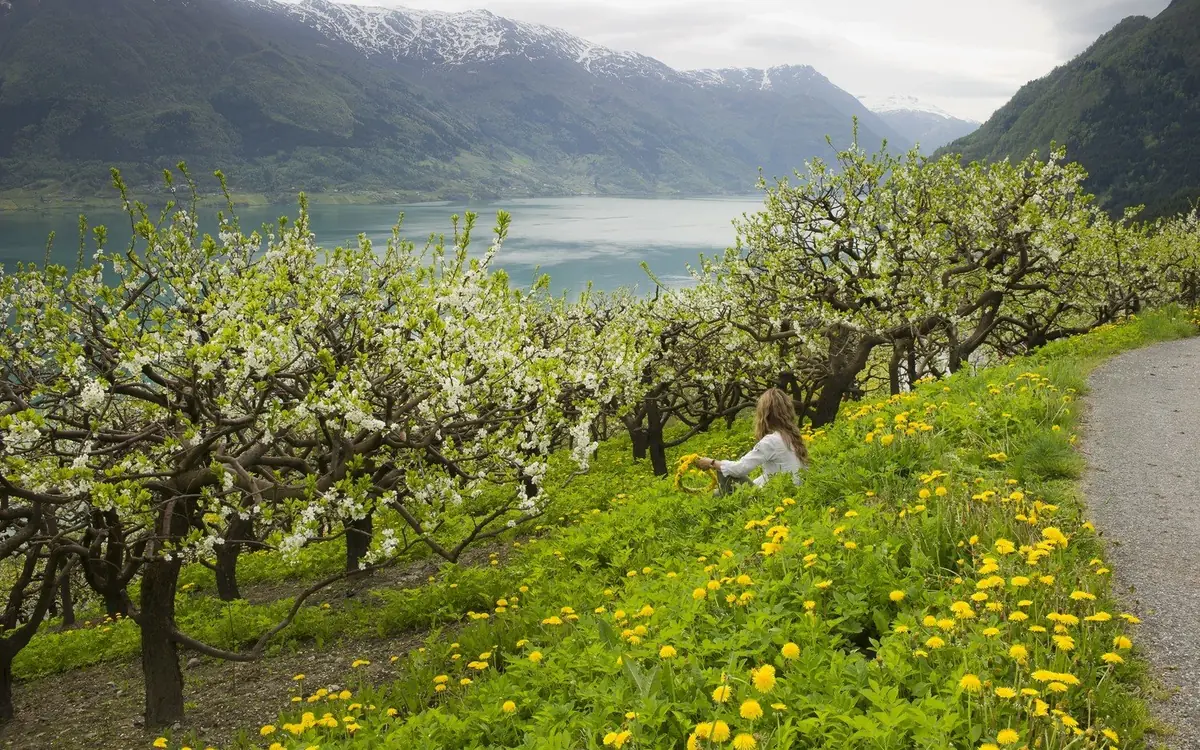
The same slopes that flower in May are pressed in September, and the result has protected designation of origin: cider made from Hardanger fruit, on Hardanger farms, by a set of producers small enough to visit in an afternoon. It is the least-known reason to come here and one of the better ones.
Quick answer
Hardanger is Norway’s fruit district and its cider carries a protected designation of origin. Producers are small farms along the fjord — around Ulvik, Lofthus, Utne and Kvam — and many welcome visitors for tastings between summer and autumn. It pairs naturally with a boat trip: an hour on the water in the morning at $94, an afternoon among the orchards.
Hardanger cider, at a glance
- Protected status
- Yesdesignation of origin for Hardanger cider
- Made from
- Local applesgrown on the fjord slopes
- Producers
- Small farmsalong the fjord, many open to visitors
- Where
- Ulvik, Lofthus, Utne, Kvamand elsewhere along the water
- Season for visits
- Summer – autumnpressing is in September
- Styles
- Dry to sweetstill and sparkling, some ice cider
- Why it works here
- Slow ripeningacidity and aroma from cool light
- Since
- Monks, 13th centuryfruit growing has been continuous
- Pairs with
- A morning on the waterand an afternoon on the road
- Driving
- Plan itNorway has effectively zero tolerance
Why the fruit tastes the way it does
Cool light, long days and slow ripening
Slow ripening keeps the acid, and the acid is what makes the cider.
Apples grown at sixty degrees north ripen slowly. The days are long but the heat is modest, so sugar accumulates gradually while acidity is retained rather than burned off. That is a good recipe for cider: acidity is structure, and the aromatics that develop in a slow ripening survive fermentation.
The varieties reflect it. A lot of Hardanger cider is built on culinary and dessert apples rather than the tannic cider varieties of England and Normandy, which produces something lighter, sharper and more aromatic — closer to a dry white wine than to a west-country scrumpy.
The protected designation, granted in recent years, means cider labelled Hardanger has to be made from fruit grown in the district and fermented here. It is the same idea as an appellation, applied to a fjord.
Several producers make ice cider as well, concentrating the juice by freezing. It is expensive, sweet and closer to a dessert wine, and it is a genuinely northern thing to make.
Visiting the orchards
Five practical notes
It is farmland, not a wine region with a visitor centre on every corner.
- Check opening before you drive
These are working farms. Many welcome visitors; most have limited hours and some need booking.
- Plan the driving
Norway has effectively zero tolerance for alcohol at the wheel. Tastings and a car do not combine.
- Autumn is pressing season
September and October are when the fruit comes in and the farms are busiest — and most interesting.
- Buy at the farm
Norwegian alcohol retail is state-controlled, and farm sales are one of the few direct routes. Prices are better and the range is wider.
- Combine with a boat
A RIB trip in the morning and an orchard afternoon is the best day in Hardanger that does not involve a mountain.
The same slopes flower for three weeks in spring, and that is the other reason to come here.
Blossom season→Hardanger on a plate
Five local things worth eating and drinking
The fruit district feeds itself well.
- Cider
Dry to sweet, still and sparkling, with protected designation of origin.
- Apple juice
Pressed on the same farms, and a serious product in its own right.
- Ice cider
Concentrated by freezing, sweet and expensive, and very northern.
- Fruit in autumn
Roadside stands from late summer: apples, pears, plums and cherries.
- Smoked trout and cured meats
The other half of a Hardanger plate, from the same farms.
Common questions
Hardanger cider, answered
Is Hardanger cider protected?
Yes. Hardanger cider carries a protected designation of origin, which requires the fruit to be grown and the cider made in the district.
Where can you taste it?
At the producing farms along the fjord — around Ulvik, Lofthus, Utne and Kvam. Many welcome visitors in summer and autumn, and some require booking.
What does it taste like?
Lighter and sharper than English or Norman cider, with more aromatics — closer to a dry white wine than to a traditional farmhouse cider.
When is the best time to visit the orchards?
Late April to mid-May for blossom, and September to October for pressing and fruit.
Can I buy cider to take home?
Yes, at the farms, which is one of the few direct retail routes in Norway’s state-controlled system.
Can I combine cider with a boat trip?
Easily. A RIB safari takes an hour or two; the orchards fill the rest of the day. Plan the driving, because Norway has effectively zero tolerance at the wheel.
Go deeper
More on the Hardangerfjord
Hardangerfjord boat tours
What the trips are, where they leave from and what you see.
The verdictWhich trip is best
Seven trips ranked, and which village to start from.
From BergenFrom Bergen
Two hours by road, and what actually fits into a day.
NorheimsundNorheimsund
The village with the waterfall you can walk behind.
FyksesundFyksesund
The narrow arm, the bridge and why the boats go in.
EidfjordEidfjord
The inner end, under the plateau and Vøringsfossen.
