Practical
What to wear on a fjord RIB tour: the suit does most of it
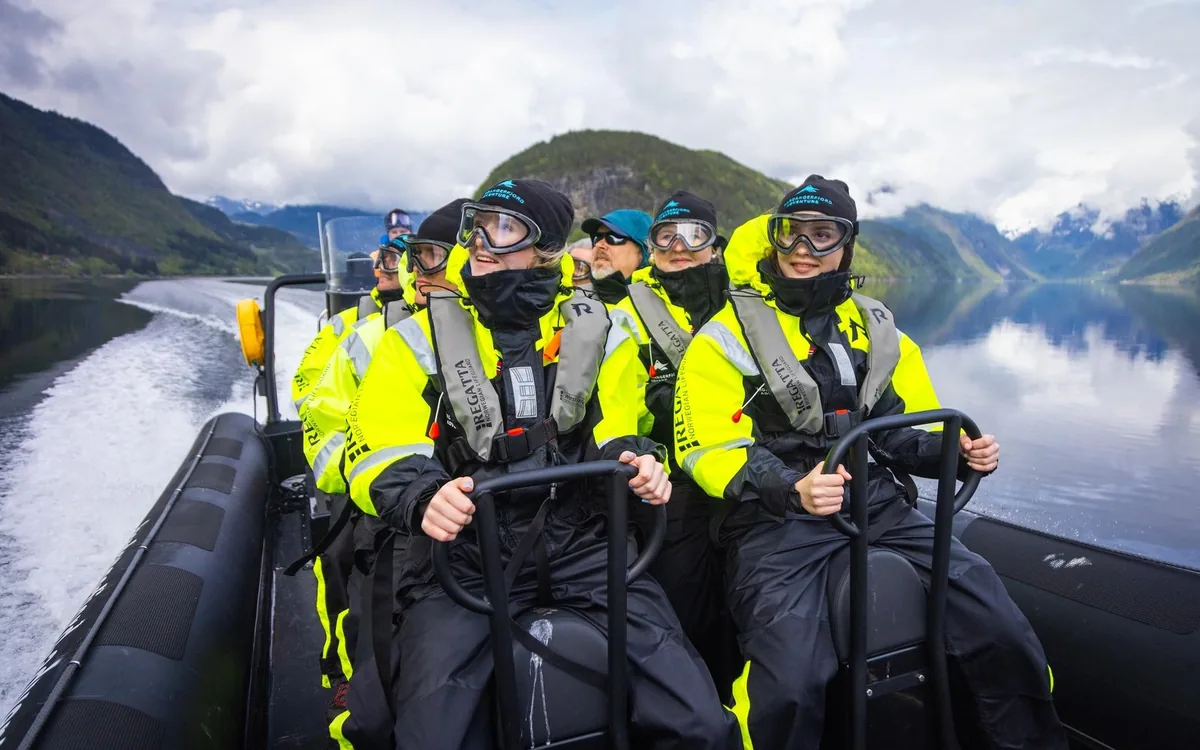
Every RIB operator on the Hardangerfjord hands out a survival suit at the quay, and it does more than people expect: windproof, buoyant and largely waterproof over whatever you are wearing. What it does not do is cover your head, your hands or your camera, and those three decide whether you enjoy the hour.
Quick answer
Wear normal warm layers, a fitted hat and gloves, and closed shoes; the survival suit goes over the top. You will get wet from spray and from the waterfall the boat goes under, so anything that must stay dry belongs in a bag. Sunglasses in every month — glare off fjord water is constant — and nothing loose, because thirty knots takes hats off heads.
What to wear, at a glance
- Provided
- Survival suitplus life jacket and goggles
- Not provided
- Hat, gloves, shoesthe three that matter
- You will get wet
- Yesspray, and a waterfall on purpose
- Base layer
- Warm, not cottonwool or synthetic
- Shoes
- Closed and grippydecks are wet
- Hat
- Fittedthirty knots removes anything loose
- Gloves
- Thin, so you can work a cameraand warm ones over them in spring
- Sunglasses
- Every monthglare off the water
- Phone
- In a waterproof bagnot in a pocket
- Summer temperature
- 15–20°C on landcolder at speed on the water
The layers
What actually keeps you comfortable for an hour
Warm layers, a fitted hat, gloves you can use, closed shoes — and the suit over all of it.
The suit does the heavy lifting. It is a one-piece flotation suit: buoyant, windproof and sealed enough to keep most of the spray out. It goes over your own clothes, it takes two minutes to get into, and it means you do not need specialist outdoor kit for a Norwegian fjord.
Underneath: warm layers, not cotton. A merino or synthetic base and a fleece is plenty even in April. Cotton holds damp and chills you as soon as the boat stops moving.
A fitted hat. At thirty knots anything loose is gone, and a hood inside the suit flaps and blocks your hearing. A close beanie is the answer.
Two pairs of gloves, or one thin pair. You want to be able to work a phone or a camera; in summer a thin pair is enough, in spring take something warmer to put over them.
Closed shoes with grip. You are stepping onto a wet deck and, on some trips, onto a rock or a pontoon. Trainers are fine; sandals are not.
What to bring, and what to leave
Six items, decided before you leave the car
The rule: anything that must stay dry needs a bag.
- Take: a waterproof bag or case for the phone
The boat goes under a waterfall. This is not the moment to discover your pocket is not sealed.
- Take: sunglasses
Glare off fjord water is constant, in cloud as much as in sun.
- Take: a lens cloth
Spray dries to a haze that a sleeve only smears.
- Leave: an umbrella, a big camera bag, anything loose
None of it survives thirty knots or a deck with twelve people on it.
- Leave: your own life jacket
Provided, and it has to be theirs for insurance reasons.
- Consider: a change of socks in the car
Small comfort, disproportionate effect, and everybody who has done this twice does it.
If you want to know exactly what the hour contains before you commit, the main guide walks through it minute by minute.
Hardangerfjord boat tours→Photographing from a RIB
Wet, fast and low — and the best angle on the fjord
Shoot upwards, shoot fast, and put the camera away before the waterfall.
A rigid inflatable is the worst platform in the world for careful photography and the best for the pictures that actually look like this fjord.
Low angle. You are a metre above the water, so the walls tower in a way they never do from a big deck. Shoot upwards deliberately.
Fast shutter. The hull slams at speed and the vibration is constant. 1/1000 or faster, and shoot in bursts.
Protect the front element. Spray is constant and salt-free here, which is one mercy, but water on the lens ruins frames either way. Carry a cloth and keep the camera under the suit between stops.
And put it away for the waterfall. Unless it is in a waterproof housing. The bow goes into the spray on purpose and there is no dry corner of the boat when it does.
With children on a RIB
Five practical notes
These trips take families, and a little planning helps.
- Check the minimum age
Operators set one and it varies by boat and season.
- Suits come in small sizes
Say so when you book so the right ones are on board.
- Sit mid-boat
The bow slams hardest; the middle is the smoothest seat.
- Warn them about the waterfall
It is loud, sudden and wet. Forewarned it is a highlight; unforewarned it is a shock.
- An hour is the right length
The 105-minute trip is a long time for a small child in an open boat.
Common questions
What to wear, answered
What should I wear on a fjord RIB tour?
Warm layers that are not cotton, a fitted hat, gloves you can operate a camera in and closed shoes. The survival suit goes over the top and is provided.
Are suits provided?
Yes, on every RIB trip on this site, along with a life jacket and goggles.
Will I get wet?
Yes. Spray at speed, and the boats go under a waterfall deliberately on most trips.
Do I need waterproof trousers?
No. The suit is a one-piece and covers your own clothes.
Can I take a camera?
Yes, and it needs a waterproof bag or case. Salt spray and fresh spray are both hard on lenses.
Is it cold in summer?
Land temperatures of fifteen to twenty degrees feel considerably colder at thirty knots. The suit handles it; your hands and ears are yours to protect.
Go deeper
More on the Hardangerfjord
Hardangerfjord boat tours
What the trips are, where they leave from and what you see.
The verdictWhich trip is best
Seven trips ranked, and which village to start from.
From BergenFrom Bergen
Two hours by road, and what actually fits into a day.
NorheimsundNorheimsund
The village with the waterfall you can walk behind.
FyksesundFyksesund
The narrow arm, the bridge and why the boats go in.
EidfjordEidfjord
The inner end, under the plateau and Vøringsfossen.
